
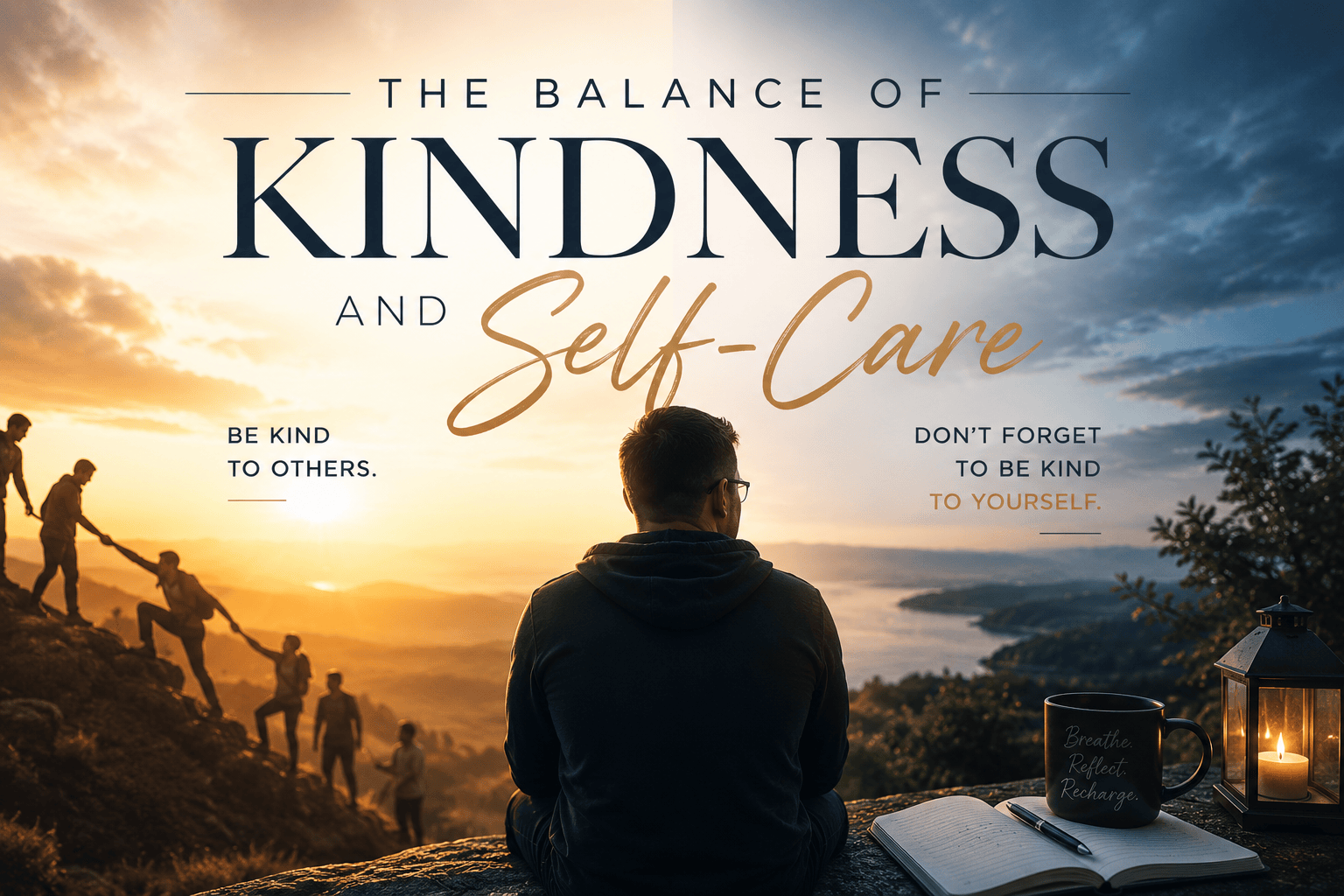
Why Being a Good and Empathic Person Can Be So Hard
I have always been the kind of person who tries to be good to people. I care about how someone feels, I try to help when I can, and a lot of the time I think about other people before I think about myself.
That sounds like a good thing, and most of the time I still believe it is. But being kind and empathic is not always this peaceful, beautiful thing people make it sound like. Sometimes it is frustrating. Sometimes it is exhausting. Sometimes it hurts.
One of the hardest parts is figuring out who is actually being genuine with me and who is just being nice because they want something. It can be disheartening when you invest your time and energy into others only to find out that their intentions were not sincere. The emotional labor of caring can take a toll, and it often feels like a balancing act between being compassionate and protecting my own heart.
I have gotten better at spotting these behaviors over time, but that does not mean it is always obvious right away. Sometimes someone will keep coming back and overusing my kindness, treating my empathy as if it were a never-ending resource. They might initially present themselves as friends but gradually reveal a pattern of only reaching out when they have a specific need. Other times, they will ask for one thing, get what they need, and then suddenly stop talking to me or start acting weird afterward, leaving me confused and questioning my own worth.
That change tells me a lot, and once I notice it, it is hard not to look back and wonder whether I should have seen it sooner. Was I too trusting? Did I ignore the signs? These questions linger in my mind, adding to the emotional burden I carry. While it is essential to be kind and open-hearted, these experiences make it clear that I also need to establish boundaries.
Navigating relationships as a genuinely kind person means learning to differentiate between those who appreciate my empathy and those who take advantage of it. It’s a journey of growth, self-reflection, and sometimes, painful realizations. I still strive to spread kindness and compassion because, at the end of the day, I believe it makes the world a better place. However, I have also learned the importance of self-care and the necessity of surrounding myself with people who value and reciprocate my love and support.
When I Realize Someone Used Me
I do not usually get angry first when that happens. Most of the time, I blame myself.
I will sit there, reflecting on the situation, thinking I was being a dense head for trusting someone or for not realizing what was going on fast enough. The hurt is there too, of course, but part of me almost expects that because I already know not everyone is going to be nice. It’s a strange paradox; while I strive to see the good in others, there’s a persistent whisper in my mind reminding me that kindness can sometimes be a façade.
That does not make it hurt less. It just means I am not always surprised by it anymore. Each experience builds a wall around my heart, a wall I wish I didn’t have to construct. I often wonder if being caring makes me more vulnerable, but then again, I believe it’s essential to retain that capacity for empathy and understanding. It’s what connects us as human beings, after all.
I think that is one of the harder parts about being a caring person. You want to believe people mean well, but experience teaches you that some people do not. They may take your trust for granted or manipulate your kindness to serve their interests. It’s a painful lesson to learn repeatedly, and yet, despite the disappointment, I find myself unwilling to let go of my belief in the goodness of others.
Ultimately, I realize that while some individuals may let me down, there are still those who enrich my life with genuine support and compassion. I hold on to these relationships, even as I navigate the complexities of trust and vulnerability, hoping that the positive interactions will outweigh the negative ones and that my caring nature will, in the end, define my experiences more than the betrayals.
Treat Others the Way You Want to Be Treated
I grew up hearing that phrase all the time: “Treat others the way you want to be treated.” I took that seriously.
If I am kind to someone, respectful to them, patient with them, or willing to help them, part of me naturally hopes they will treat me the same way. I believe that kindness and respect should be reciprocal, and it creates a sense of community and understanding between people. When we give to others, we often expect a certain level of consideration in return, fostering a healthier and more supportive environment for everyone involved.
I do not mean that I expect people to owe me something every time I do something nice. It is more basic than that. If I am good to you, I hope you will be good to me too. This hope isn’t selfish; it’s a fundamental aspect of human relationships. When someone is treated with kindness, it encourages a cycle of positivity that benefits both parties, leading to stronger connections and mutual respect.
The problem is that life does not always work that way. Reality can sometimes be harsh. You can be good to someone and they can still use you. This can lead to feelings of betrayal and disappointment when those we care about do not reciprocate our efforts. You can be there for somebody when they need you and then find out they are nowhere around when you need anything. This realization can be particularly jarring, especially when you have invested time and energy into the relationship, believing it to be a two-way street.
You can keep giving someone the benefit of the doubt and eventually realize you were the only one treating the connection like it actually mattered. This one-sided dynamic can lead to exhaustion. That is where being kind starts getting exhausting. When your kindness is met with indifference or, worse, exploitation, it can feel draining and disheartening. It raises questions about the nature of our interactions and whether or not we should continue extending ourselves to others.
In navigating these complexities, it’s essential to find a balance. Protecting your emotional well-being while still being the person you want to be in the world is a delicate act. It’s about learning when to step back and re-evaluate relationships that may not serve your best interests, while also remaining open to the possibility that there are genuine, kind-hearted people out there who will value and reciprocate your kindness. Ultimately, nurturing healthy relationships is a crucial aspect of living a fulfilling life, and sometimes that requires making tough decisions about who deserves your kindness and support.
Sometimes I Wonder If Being Nice Is Worth It
There have definitely been times when I have thought that I do not even want to be nice anymore.
When you have been used, disappointed, or treated like your kindness is something people can just take from you, there are moments when you wonder whether it would be easier if you simply stopped caring. The emotional toll of giving and not receiving can lead to a sense of depletion, making it hard to stay true to oneself. It’s a challenging dilemma—being generous and empathetic in a world that sometimes seems to reward the opposite behavior.
But the truth is, being kind has always been part of me. It has woven itself into the fabric of who I am. Even when I am frustrated, even when I am tired of being the one who gives more, that part of me is still there. I do not think I could completely shut it off even if I wanted to. It’s as if kindness pulses within me, urging me to act and connect with others in meaningful ways. There is a joy in knowing that my actions, no matter how small, can potentially brighten someone’s day or provide support in their time of need.
And honestly, I do not think I really want to lose it either. Despite the heartaches and disappointments, kindness offers a unique sense of fulfillment. It reminds me of my capacity for compassion and empathy, values that I hold dear. I believe that being kind not only benefits others but also enriches my own life in ways that are difficult to quantify.
I just want to learn how to protect it better. To do so, I need to set boundaries that allow me to continue being kind without feeling drained. It’s about finding that delicate balance between giving to others and taking care of my own emotional well-being. I aspire to cultivate a kindness that is sustainable, one that comes from a place of strength rather than obligation. By doing this, I hope to embrace my kind nature without feeling resentful or taken advantage of, ultimately fostering a more authentic connection with the world around me.
Being Empathic Makes Boundaries Hard
Another thing I struggle with is boundaries.
Being empathic means I tend to think about what the other person is going through, how they might feel, whether I am disappointing them, or whether saying no is going to make their life harder. This inclination to prioritize others’ feelings often leads me to overextend myself, absorbing their emotional burdens as if they are my own.
The problem is that when you think like that all the time, it becomes very easy to put yourself last. I find myself feeling drained and overwhelmed, often overlooking my own needs in the chaos of trying to be there for everyone else. It creates a cycle of self-neglect where my own emotional well-being takes a backseat to the concerns of others.
I am trying to work on that now. I have had to remind myself that I cannot please everyone all the time. Setting boundaries is crucial for my mental health, yet it feels so difficult sometimes—it’s a constant battle between wanting to be supportive and recognizing the necessity of self-care.
I cannot keep trying to make everybody else happy while ignoring whether I am tired, unhappy, stressed, or just do not want to do something. It’s important to acknowledge that my feelings are valid too; they matter just as much as anyone else’s. By neglecting my own emotions and needs, I risk burning out and becoming resentful, which wouldn’t benefit either myself or those I’m trying to help.
I need to think about myself too because I cannot keep giving everything away and expect myself to somehow be fine afterward. The more I give without caring for my own needs, the less I have to give in return. Learning to articulate my needs and set healthy boundaries is an ongoing journey, but I recognize it as an essential step toward achieving a more balanced and fulfilling life. I’m committed to practicing self-compassion and allowing myself the space to breathe, recharge, and hold my own well-being in high regard.
The Guilt Comes Almost Immediately
The part I still struggle with the most is what happens after I finally choose myself.
Even when I know I have a perfectly good reason to say no, guilt can hit me almost immediately, like an unwelcome guest that seems to arrive uninvited. It’s a sensation that washes over me, often catching me off guard, causing my stomach to twist in knots. I start feeling like I was selfish for thinking about myself before somebody else, and it can be a terrible feeling that lingers long after the decision has been made.
One side of my brain knows I did nothing wrong; after all, self-care is essential, and it’s okay to prioritize my needs. Yet, the other side starts telling me I should have helped, I should have said yes, or I should have put the other person first. This internal battle creates a conflict that can be quite exhausting, making it difficult to find peace after asserting my boundaries. It feels like walking a tightrope where one misstep could send me tumbling into the abyss of self-doubt and disappointment.
That is why I think boundaries are harder than people make them sound. It is easy to tell someone, “You need to learn to say no.” This advice rolls off the tongue effortlessly, almost like a simple mantra that can be repeated without much thought. However, the hard part is learning how to say no and then not punish yourself for it afterward. It’s the aftermath that truly tests our resilience and self-acceptance.
Practicing self-affirmation and reminding myself of my worth often helps counteract the guilt. I try to acknowledge that saying no does not diminish my value, nor does it lessen my compassion towards others. Instead, it allows me the space to recharge and be better equipped to help when I truly can. This journey of embracing my boundaries is ongoing, but it’s essential for my mental well-being and personal growth. Over time, I hope to find a more harmonious balance between my needs and the needs of others, fostering relationships that respect both. In this way, I can begin to see that choosing myself is not an act of selfishness, but rather an important step in nurturing a healthier, more fulfilling life.
I Cannot Please Everyone
This is something I am slowly learning.
I cannot please everyone, and I cannot make everybody happy all the time. This realization has come to me with a mix of relief and discomfort. I have dedicated so much of my energy to ensuring that those around me are content, often neglecting my own needs in the process. This journey has taught me that it’s essential to strike a balance between caring for others and caring for myself.
I have to make myself better and happy too. It’s a crucial step on my path to personal growth. I have to pay attention to what I need instead of automatically putting everybody else ahead of me. This shift in focus has allowed me to discover what brings me joy and fulfillment. Prioritizing my own well-being does not mean I am disregarding the well-being of others; rather, it signals a healthy and necessary self-awareness.
That does not mean I stopped caring. It does not mean I became selfish. It means I am trying to understand that I matter too, that my feelings and experiences are valid. It’s often a struggle to reconcile this newfound perspective with my ingrained habits of self-sacrifice. Yet, I know that by nurturing my own happiness, I can better support those around me.
I can care about somebody and still tell them no. Setting boundaries is a crucial aspect of maintaining relationships and my mental health. It’s okay to respect my limits, and in doing so, I create a space for others to also respect theirs. This empowers me to engage in relationships from a place of strength rather than obligation.
I can understand what someone is going through without making their problem completely mine. Empathy is a powerful tool, but it becomes counterproductive if it leads me to shoulder everyone else’s burdens. I recognize that while it’s important to be supportive, it’s equally vital to maintain my emotional independence.
I can want to help someone and still realize that I do not have the energy to do it every single time. Our resources—be they emotional, physical, or mental—are finite. Acknowledging this limitation does not diminish my care for others; it enhances it by encouraging a more sustainable approach to relationships. By recognizing when I need to step back, I allow myself the space to recharge and, ultimately, show up more fully when I do choose to engage.
My Guard Is Up More Now
One thing I have learned over the years is that if I am good to someone and I realize they took advantage of me once, I am not going to keep letting the same thing happen. It’s an essential lesson that life has taught me, often through difficult experiences. Trust is a fragile thing—it takes time to build, but only moments to shatter.
Once I see patterns of behavior that indicate someone is not being genuine, I remember it. My guard is up a lot more now than it used to be. It’s not about becoming cynical or paranoid; rather, it’s about developing a form of self-preservation. I’ve come to understand that my kindness should not be mistaken for weakness.
There are still times when I let it down, especially when I start trusting someone or I believe they are being genuine. During these moments, I often find myself opening up, sharing more about my life, and investing emotionally in the relationship. But experience has made me more aware of the signs to watch for, helping me navigate future interactions more wisely.
I notice when someone only talks to me when they need something. This behavior is telling—it reveals priorities and intentions that are not aligned with genuine friendship. I notice when they disappear after I help them, as if my support was merely a transaction rather than a mutual exchange of care. It’s disappointing, but very telling.
I also notice when their attitude changes or when the whole relationship suddenly starts feeling one-sided. This imbalance often leads me to question the authenticity of the connection we have. Recognizing these signs has made me reflect on what I truly value in relationships: reciprocity, authenticity, and mutual respect.
I do not think that means I am suspicious of every person I meet. I strive to approach new acquaintances with an open mind and heart, allowing for the possibility of genuine connections. However, I think it means that experience has taught me to pay attention to my instincts and the patterns of behavior that others exhibit. Trust is built over time, and I have learned to be more discerning about who earns that valuable position in my life.
There Is a Difference Between Being Kind and Being Easy to Use
This is probably one of the biggest things I am learning now.
Being a good person does not mean I have to give everybody unlimited access to my time, energy, emotions, or kindness. It’s a profound realization that kindness and generosity can coexist with boundaries. I’ve come to understand that my well-being is just as important as the needs of others, and prioritizing myself does not make me selfish. Instead, it’s an essential part of maintaining healthy relationships and preserving my emotional health.
Someone can be struggling, and I can care about them without letting them drain me. I can offer support and empathy without compromising my own mental state. It’s okay to lend a hand or listen to someone in need, but that does not mean I have to exhaust myself or put my own needs on the back burner. I am learning to recognize the signs when giving becomes too much and to step back when necessary.
Someone can ask me for something, and I can say no. This is perhaps one of the most empowering lessons I am currently embracing. Saying no is not the end of a relationship; rather, it can be a healthy assertion of my boundaries. I am learning the importance of evaluating each request against my capacity and comfort level. It’s all right to decline without feeling the weight of obligation.
Someone can be disappointed with me, and that does not automatically mean I did something wrong. This last realization has been particularly challenging for me. I often find myself grappling with the idea that others’ disappointments reflect my shortcomings. Guilt can show up fast, twisting my thoughts and convincing me that I need to fix everything. However, I am trying to get better at understanding that disappointment is a natural human experience and not always indicative of failure on my part. The journey involves recognizing that I am not responsible for others’ feelings and that it’s possible to maintain positive relationships even when not everyone is satisfied.
In striving for balance, I continue to evolve and learn that being a good person lies in being true to myself while also being compassionate to others. Each step is progress, and acknowledging these truths is part of my personal growth journey.
I Do Not Want to Become Cold
I do not want bad experiences to turn me into somebody I am not.
I do not want being used by a few people to make me believe everyone is going to use me. I do not want disappointment to make me stop caring about people altogether. It’s easy to fall into the trap of cynicism, letting the negative encounters shape my perception of the world. Each time I face betrayal or unkindness, there’s a lingering temptation to withdraw, to build walls around my heart to protect it from more pain.
There are times when I wish I could care less because maybe life would be easier that way, but that is not really me. Deep down, I know that my compassion is one of my greatest strengths. It connects me to others and enriches my life in so many ways. Even in moments of hurt, I recognize the beauty that comes from empathy and understanding. It’s the small gestures, the shared smiles, and the genuine conversations that remind me why I value my feelings and connections with others.
I still want to help people. I still want to listen. I still want to understand what someone is going through. I still want to treat people the way I would want them to treat me. It’s crucial for me to remain open-hearted and maintain that desire to uplift others, even if I occasionally face setbacks. The journey of understanding and supporting people in their struggles adds an invaluable depth to my existence. It reflects my belief in humanity, in the power of kindness.
However, I realize I must also be careful and discerning in my approach. I just want to get better at knowing when somebody deserves that kindness and when somebody is only taking advantage of it. It’s a delicate balance between generosity and self-preservation. Trusting my instincts and learning from experiences can empower me to embrace my caring nature while guarding against those who might seek to exploit it. Ultimately, my goal is to cultivate resilience, ensuring that my spirit of kindness remains intact, shining brightly no matter the challenges I face.
Being Good to Other People Should Not Mean Being Bad to Myself
I am still working on all of this.
I do not have perfect boundaries. Sometimes the guilt still wins. Sometimes I still give too much. Sometimes I still realize after the fact that somebody was not as genuine as I thought they were. In moments of reflection, I see how easily I can slip back into old habits, prioritizing others’ needs over my own and grappling with feelings of obligation.
But I am more aware of it now. Awareness is the first step towards meaningful change. The journey is not linear, and there are days when I feel triumphant and others when I falter. Understanding the dynamics of my interactions has become a crucial part of my growth—recognizing the signs of insincerity and recognizing my own patterns in relationships.
I still believe kindness matters. I still believe empathy matters. I still believe in treating people the way I want to be treated. These values are deeply rooted in me, like principles guiding me through the complexities of human interaction. However, I am learning that kindness does not necessitate self-sacrifice.
I just do not believe anymore that being a good person means I have to keep giving until there is nothing left for me. There is a limit to what I can offer, and acknowledging that limit is not an act of selfishness, but rather a necessary step to maintain my own well-being. Not everyone deserves the same amount of access to me. Some people earn trust through their actions, while others lose it through negligence or selfish behavior. Some people show pretty quickly that they were only around because they wanted something, and recognizing this facade is an essential realization.
And once I see that, I am learning that I do not have to keep opening the same door for them. I can set healthy boundaries that protect me. I can still be kind without being easy to use. I can care about people while caring about myself too. It’s a delicate balance, one that requires continual adjustment and vigilance. I can be empathic without carrying everybody else on my back, understanding that sometimes it’s important to take a step back and focus on my own emotional health.
That is the balance I am trying to find now. It’s not always easy, and there are days filled with doubt, but I am committed to this path. I do not want to stop being a good person. I just want to stop believing that being good means I have to hurt myself to prove it. I can be generous and supportive while also being mindful of my own needs and limitations, leading to healthier relationships and a more authentic self. Recognizing this balance is vital, and it empowers me to navigate my interactions with the compassion that remains at my core, while ensuring I remain intact.


Leave a Reply